Burn It Down to Build It Back: How Jay P Found His Sound Again After Running on Empty

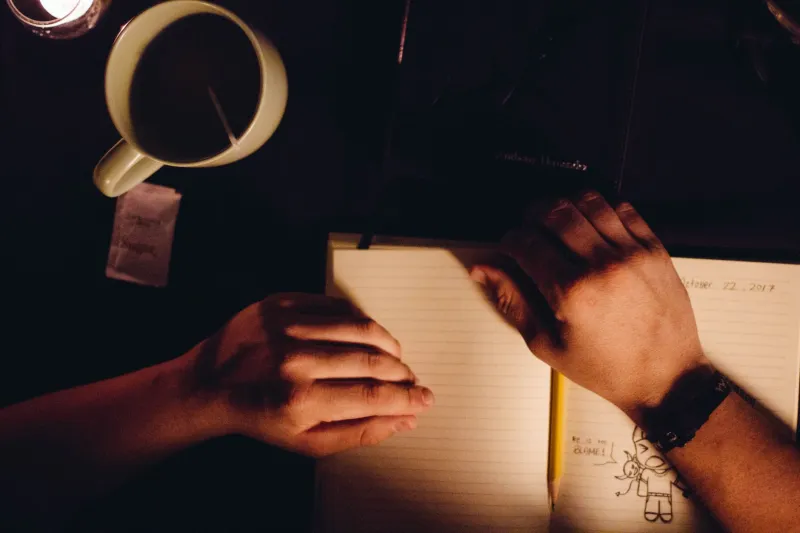
Photo by Photo by Назарій Ковальов on Unsplash on Unsplash
There's a version of burnout that looks productive from the outside. You're still releasing stuff. You're still showing up to sessions. You're still posting, still responding, still performing the role of an artist who has it together. But inside, the signal is gone. The static is everything.
That's where Jay P was about two years ago — not collapsed on the floor, but hollowed out. Going through the motions with a smile that didn't quite reach his eyes.
"I kept making music," he says, "but I couldn't tell you why anymore. It started feeling like I was just filling a quota. Like, okay, drop something, get the numbers, move on. That's not why I got into this."
The wake-up call wasn't dramatic. No single catastrophic moment. It was a Tuesday afternoon, headphones on, staring at a session he'd been working on for three weeks — and realizing he genuinely did not care how it turned out. That indifference scared him more than any bad review ever had.
The Hardest Part Was Admitting It
For a lot of artists, burnout carries shame. Especially when your audience is watching. There's this pressure — amplified by social media — to project endless creativity, endless output, endless passion. Admitting you're running on fumes feels like betrayal. Like you're letting people down, or worse, confirming the critics who said you couldn't last.
Jay P sat with that discomfort for longer than he should have. He tried the usual fixes first: new plugins, new collaborators, new playlists for inspiration. He read the books, watched the interviews, did the journaling. None of it hit the root.
"I was treating symptoms," he says. "Putting bandages on something that needed surgery."
The real problem wasn't a lack of tools or ideas. It was that he'd been making music for something — for approval, for streams, for the version of himself that people already knew — instead of making it from something. The internal compass had been replaced by an external scoreboard, and he hadn't even noticed it happening.
Dismantling the Formula
The first real shift came when Jay P made a decision that felt almost reckless: he deliberately stopped doing the things that had worked.
Not forever. Not out of spite. But as an experiment. He shelved the production techniques that had become his signature. He stopped working in the DAW he'd used for years and opened up something unfamiliar — clunkier, less intuitive, harder to navigate. He started sketching ideas on his phone at weird hours instead of waiting for proper studio time. He listened almost exclusively to music that had nothing to do with his genre: old soul records, film scores, field recordings, stuff that had no business influencing what he was building.
The goal wasn't to become a different artist. It was to become a less comfortable one.
"When everything is easy and familiar, you stop making choices," he explains. "You just default. The unfamiliar stuff forces you to actually decide — okay, what do I want this to sound like? Not what does it usually sound like. What do I want?"
That question — deceptively simple — unlocked something. Because wanting requires caring. And caring meant the indifference was starting to crack.
The Permission Slip Nobody Gives You
Something else happened during that period that Jay P didn't expect: he gave himself permission to make bad music.
Not performatively bad. Not ironic bad. Just genuinely, unself-consciously messy and unfinished and strange. Stuff he'd never release. Stuff that existed purely as a process, not a product.
In the American music landscape — where everything feels like content, where every demo is a potential single, where artists are expected to monetize every corner of their creativity — that kind of private making is almost countercultural. But it was exactly what he needed.
"I had forgotten that music could just be for me," he says. "Like, not everything has to go somewhere. Some of it can just exist because I needed to make it that day."
That private work eventually started bleeding into the public work. Not directly — you won't hear those weird Tuesday experiments on any official release. But the attitude did. The willingness to try something that might not work. The comfort with imperfection. The sense that the process itself had value, not just the outcome.
What the Other Side Looks Like
Jay P is careful not to frame what came out of this as some triumphant reinvention. He's not a new artist. He didn't ditch his identity or chase a trend. What shifted was subtler — and maybe more durable because of it.
The music he's been making since that period has a different quality to it. There's more air in it. More risk. You can hear him making choices instead of executing habits. Whether listeners can articulate that difference or not, they feel it — and the response has reflected that.
But the bigger takeaway isn't about sound at all. It's about relationship. Specifically, the relationship between an artist and their own work.
"I had to fall out of love with my old process before I could fall back in love with making music," he says. "That's uncomfortable. It feels like loss. But it's actually just growth being awkward, which it always is."
For Artists Who Are There Right Now
If any of this sounds familiar — if you're showing up to your creative work but not really there — Jay P's advice is less about technique and more about honesty.
First, stop performing productivity. The grind aesthetic is everywhere, but grinding on the wrong thing just digs a deeper hole. Recognize the difference between resistance (which you push through) and depletion (which you have to respect).
Second, break one rule that defines your style. Not all of them. Just one. See what happens when you remove a single constraint you've taken for granted. Sometimes that's all it takes to remember that you're the one making the decisions.
And third — maybe most importantly — make something with zero intention of sharing it. Something that exists entirely outside the approval economy. Remind yourself what it felt like before anyone was watching.
Burnout isn't the end of the story. For Jay P, it turned out to be the most honest chapter — the one that stripped away everything that wasn't actually his, and left behind something real.
That's a remix worth listening to.