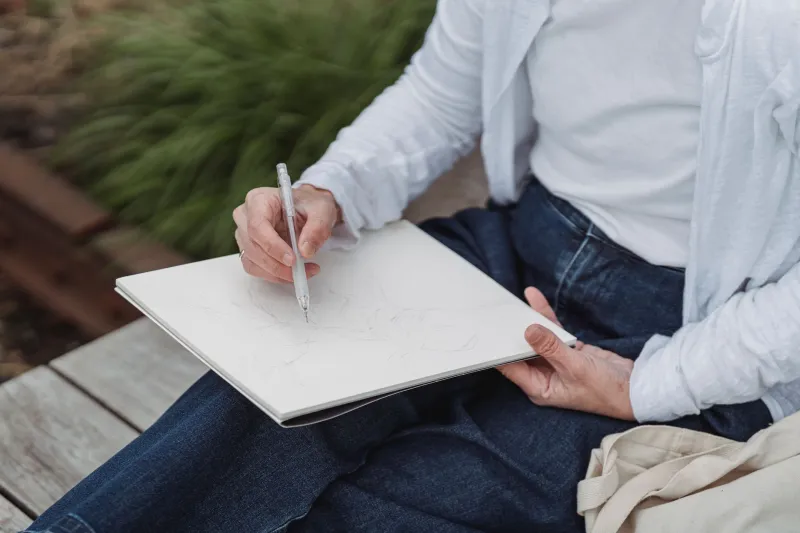
The Doubt Is the Point: Why Feeling Like a Fraud Might Be Your Best Creative Tool
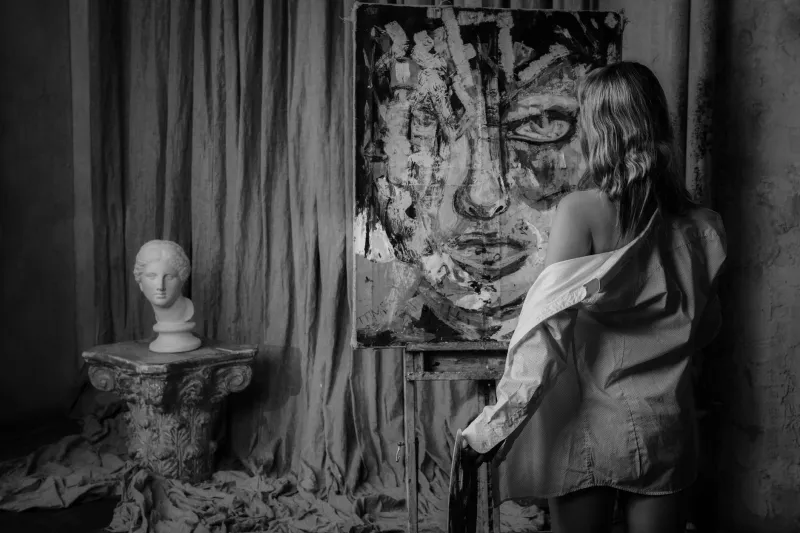
At some point, every artist sits with a finished piece — a track, a painting, a sketch, a mix — and thinks: is this actually any good, or have I just been fooling everyone? That moment is uncomfortable. It's also, if you know how to work with it, one of the most useful things that can happen to you.
Imposter syndrome gets framed as the villain in a lot of creative conversations. The thing to overcome. The mental block standing between you and your full potential. But what if that framing is backwards? What if the discomfort isn't the obstacle — what if it's the compass?
What We're Actually Talking About
First, let's be clear about what self-doubt in creative work actually is, because it gets lumped in with a lot of things it isn't. It's not depression. It's not a lack of talent. And it's definitely not a sign that you should stop making things.
At its core, creative self-doubt is your internal standard rubbing up against your current output. It means you can perceive the gap between where you are and where you want to be. That perception? That's not a flaw in your wiring. That's taste. And taste is the foundation of everything.
Jay P has talked about this feeling — finishing a piece of work and immediately seeing every crack in it, every place where the execution didn't quite match the vision. For a long time, that gap felt like failure. Eventually, it started to look like a map.
The Artists Who Never Doubt Are the Ones Who Stop Growing
Think about the creatives you know — or know of — who seem completely unbothered by criticism or self-reflection. They put out work with total confidence, never revisit, never second-guess. Sometimes that reads as confidence. Often, it's actually stagnation dressed up as conviction.
The artists who keep getting better are almost always the ones who stay a little uncomfortable. They finish something and immediately start cataloging what didn't land. They listen back to a track and hear the places where the energy dropped. They look at a canvas and know, even if no one else can see it, that something's off in the composition.
That discomfort is productive friction. It's the thing that keeps you from settling. And settling — not self-doubt — is the actual enemy of creative growth.
Reframing the Inner Critic
Here's where it gets practical, because the difference between doubt that drives you and doubt that paralyzes you is almost entirely about how you relate to it.
When you treat the inner critic like an intruder — something to be silenced, medicated away, or white-knuckled through — it tends to get louder. It becomes background anxiety rather than useful signal. You spend energy managing the feeling instead of learning from it.
But when you treat it like a collaborator — a voice that's pointing at something real, even if it's not always polite about it — the whole dynamic shifts. Instead of "I'm not good enough," the question becomes "what specifically isn't working, and what would it take to fix it?"
Jay P works this way with visual art especially. A piece that feels off doesn't get abandoned — it gets interrogated. What's the doubt actually responding to? Is it the color balance? The composition? The fact that it looks like something you've made before and you're bored of yourself? Each of those is a different problem with a different solution. The doubt is just the alert that one of them exists.
The Permission Slip You Didn't Know You Needed
One of the quieter gifts of sitting with self-doubt — really sitting with it, not running from it — is that it gives you permission to be in process. To not have it all figured out. To make something imperfect and keep going anyway.
American culture is obsessed with the finished product. The release, the launch, the reveal. But most meaningful creative work is built in the messy middle, in the drafts and the revisions and the "this isn't right yet" phases that never make it to the highlight reel. When you make peace with doubt, you're making peace with process. And process is where the actual craft lives.
There's a reason the artists who've been at this for decades — the ones with real bodies of work, not just viral moments — still talk about uncertainty in their creative practice. It never fully goes away. But it stops being scary when you understand what it's for.
Practical Ways to Use It Instead of Lose to It
If you're in a creative space and the doubt is loud right now, here are a few things that actually help — not to silence it, but to put it to work.
Get specific. "This isn't good" is not useful information. "The second verse loses momentum" or "the color palette feels muddy in the lower left" — that's something you can act on. Train yourself to translate vague unease into specific critique.
Set a deadline for the spiral. Give yourself a defined window to sit with the doubt — twenty minutes, an hour, whatever fits your process — and then make a decision. Either you identify something actionable to fix, or you ship it and move on. Endless rumination isn't discernment; it's just delay.
Separate the work from your worth. This one's hard but it's the whole game. The piece might not be landing. That doesn't mean you're not a real artist. Those are two different things, and conflating them is how doubt goes from useful to destructive.
Keep a record of the doubt being wrong. Seriously. Go back and find the piece you were convinced was terrible that people ended up connecting with. Keep that example close. It won't make the doubt disappear, but it'll remind you that your worst-case read isn't always the accurate one.
The Other Side of the Discomfort
Jay P will tell you straight: some of the work that's landed hardest — the pieces that felt most true, most alive — started from a place of serious uncertainty. Not because the doubt was inspiring in some romantic way, but because the doubt pointed at something worth digging into.
The anxiety that your work isn't good enough is, at its root, evidence that you care. That you have standards. That you're not just going through the motions. And the artists who care — who are genuinely invested in the quality and honesty of what they make — are the ones worth watching.
So the next time that voice shows up telling you that you're a fraud, that the work is weak, that everyone else has figured something out that you haven't — don't fight it. Ask it what it sees. It might just be pointing you toward your best work yet.