Staring at a Blank Canvas: What Jay P Does When the Ideas Stop Coming
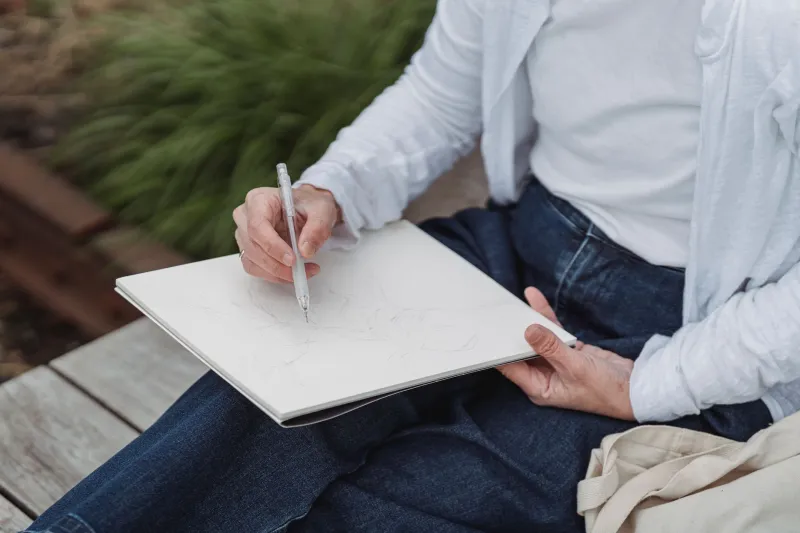
Some days, the ideas just show up. You wake up with a melody already half-formed in your head, or you pick up a pen and something just starts happening on the page. Those days feel like a gift.
And then there are the other days.
The ones where you sit down to work and there's just... nothing. A blank document. A blank canvas. A blank mind. You've been here before, you'll be here again, and knowing that doesn't make it feel any less like the well has run completely dry.
Creative blocks are one of those things that every artist knows intimately but nobody really wants to talk about — especially when you're also managing a public-facing brand. Admitting you're stuck feels like admitting failure. Like maybe the whole thing was a fluke and the ideas were never really yours to begin with.
But here's the truth: the block isn't the problem. How you respond to it is everything.
What a Creative Block Actually Is (And Isn't)
First, let's get something straight. A creative block isn't a sign that your talent dried up. It's usually a sign that something else is going on — and the art is just where it's showing up.
Sometimes it's burnout, plain and simple. You've been grinding for months, pushing output, managing releases, maintaining the social presence, handling the business side of things — and your brain is just done. It needs rest the same way your body does after a long run.
Sometimes it's fear. You made something that landed, and now there's pressure — real or imagined — to top it. The blank canvas becomes a test you're terrified of failing.
Sometimes it's external noise. Life gets loud. Relationships, money stress, news cycles, comparison culture — all of it seeps in and crowds out the quieter signal that creative work requires.
None of these are character flaws. They're just human. Recognizing which one you're dealing with is usually the first step toward actually moving through it.
Changing the Environment, Changing the Channel
One of the most reliable tricks in the toolkit — and one Jay P comes back to again and again — is simply changing where you are.
It sounds almost too simple, but there's real psychology behind it. Our brains associate environments with behaviors. If your studio or your desk has become a place where you sit and feel stuck, that association gets reinforced every time you show up. Sometimes the fastest way to break the pattern is to physically go somewhere else.
That might mean taking a sketchbook to a coffee shop, going for a long drive with no destination, or just sitting outside for an hour without a phone. It might mean traveling somewhere new — even just a different neighborhood. The point is to interrupt the loop and give your senses something fresh to process.
For Jay P, this often means getting out into the city. Walking without headphones. Actually looking at things. Letting the world do some of the work instead of trying to generate everything from inside your own head.
Consuming Differently to Create Differently
Here's a counterintuitive move that actually works: when you can't make anything, start absorbing everything.
Not in a mindless scroll way. Intentionally. Go see a movie you'd normally skip. Read a book in a genre you never touch. Visit a museum exhibit that has nothing to do with your own work. Listen to music from a completely different era or culture. Watch a documentary about something you know nothing about.
The goal isn't inspiration in the direct, lightning-bolt sense. It's cross-pollination. Ideas rarely come from staring at the thing you're trying to make — they come from unexpected collisions between things that seem unrelated until suddenly they're not.
Jay P has talked about how some of the most interesting turns in his work came from consuming something completely outside his usual lane. A painting that influenced a beat. A conversation that became a lyric. A building that suggested a color palette. The inputs don't have to be obvious to matter.
The Mental Health Piece Nobody Wants to Skip
Let's be real for a second. Sometimes a creative block isn't a creative problem at all. It's a mental health signal dressed up in artist clothes.
Depression flattens affect and kills motivation. Anxiety makes it impossible to sit still long enough to work. Chronic stress burns through the cognitive resources that creativity actually runs on. And when you're also managing a personal brand — putting yourself out there, tracking metrics, reading comments — the emotional weight compounds.
There's no hack for this one. Therapy helps. Rest helps. Movement helps. Talking to people who actually know you helps. Cutting back on social media — even temporarily — helps more than most people want to admit.
The pressure to always be producing, always be posting, always be visible can make it feel like slowing down is failure. It isn't. Sustainable creative output requires sustainable creative people. You can't pour from an empty cup, and no amount of aesthetic content can substitute for actually taking care of yourself.
Small Moves Over Big Gestures
When Jay P is in a dry stretch, one of the approaches that consistently works is lowering the stakes dramatically.
Instead of trying to make something good, make something. Anything. Doodle something ugly. Record a voice memo of a half-baked idea. Write a paragraph that goes nowhere. The point isn't the output — it's keeping the creative muscle warm and reminding yourself that the process is allowed to be imperfect.
Perfectionism is the enemy of momentum. And momentum, more than inspiration, is what actually gets work finished.
Give yourself a constraint. Thirty minutes, one color, eight bars, whatever. Constraints force decisions, and decisions create movement. Movement feels better than stillness. And once things start moving, they tend to keep going.
On the Other Side of the Block
Every artist who's been doing this long enough has a story about the block that taught them something. The stretch of months where nothing came, and what eventually came after was the best work they'd ever made.
That's not a guarantee. But it's common enough to be worth holding onto when things feel stuck.
The block isn't the end of the story. It's usually just a chapter — one where the real work is happening underneath the surface, even when there's nothing to show for it yet.
Jay P keeps making things because the alternative is worse. Not out of discipline alone, but out of genuine love for the process, even the broken parts of it. Especially those.
The blank canvas isn't an accusation. It's just the beginning.