Everything Is a Sample: How Jay P Turns the World Into Music
There's a moment Jay P talks about a lot when describing how a track comes together — standing on a Chicago L platform at 6 a.m., phone out, recording the screech of metal on rails as a train rounds a bend. Most commuters had headphones in, tuned out. Jay P was locked in. That recording ended up as the percussive spine of a track that fans have described as "somehow both industrial and warm." That contradiction? That's kind of the whole point.
For anyone who's followed Jay P's catalog even casually, it becomes clear pretty quickly that the music doesn't fit neatly into a box. There are elements of hip-hop, ambient, electronic, even jazz — but it never feels like genre tourism. It feels deliberate, layered, and lived-in. A big part of why that is comes down to how the production starts: not in a DAW, not with a chord progression, but with a recorder and an open ear.
The Field Recording Habit
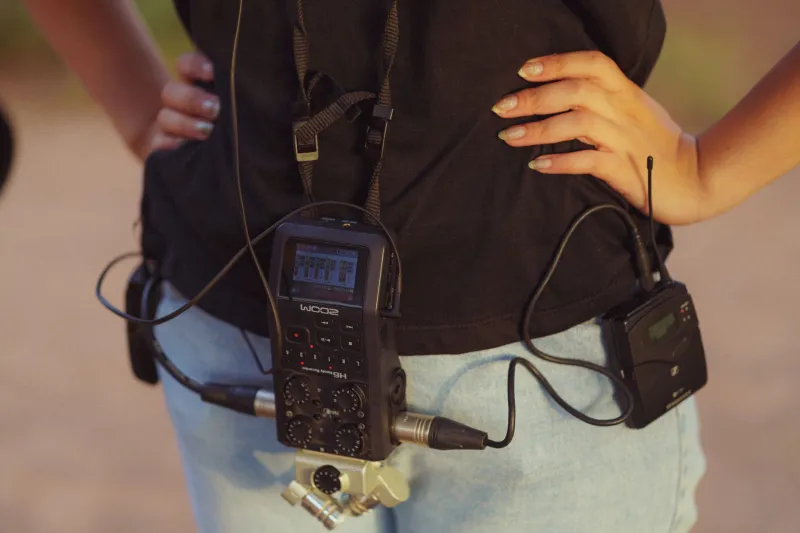
Jay P carries a portable audio recorder — a Zoom H5, for the gear-curious — almost everywhere. Not because every outing leads to a usable sample, but because the habit of listening differently changes how you move through the world. Over the years, that habit has built up a personal archive of sounds: a diner in Memphis at closing time, kids playing in a Bronx courtyard in August, the specific creak of a screen door on a family property in rural Georgia.
"People think sampling means flipping old records," Jay P has said in conversation with fans online. "And yeah, I do that too. But the stuff that really makes a track breathe — that's usually something I recorded myself. Something that's got actual life attached to it."
That philosophy shows up in the texture of the music. Real-world recordings carry imperfections — background noise, slight pitch drift, ambient room tone — that synthesized sounds just can't replicate. When those elements are layered under a melody or used to anchor a beat, they create a sense of place that listeners feel even if they can't identify exactly why.
From Raw Capture to Finished Sound
The technical side of the process is where things get genuinely interesting. Once a field recording makes it into the studio session — Jay P works primarily in Ableton Live — the raw audio gets run through a process that's part science, part intuition.
Pitch-shifting is a big one. A low rumble recorded near a construction site in Atlanta got stretched and tuned until it became a bass note that now anchors one of the most-streamed tracks in the catalog. A coffee shop recording of ceramic cups and ambient chatter was sliced into a rhythmic loop, then layered with a snare sample and a kick drum until it felt like a full percussion section.
Sidechain compression, heavy reverb sends, and granular synthesis all show up regularly in the production chain. But the goal is never to show off the tools — it's to make the source material feel intentional. The listener shouldn't necessarily know they're hearing a radiator or a passing car. They should just feel like the track has weight.
The Influence of Listening Differently
This approach didn't come from nowhere. Jay P cites a pretty eclectic list of influences when it comes to production philosophy — producers like J Dilla and Flying Lotus for their textural creativity, but also composers like John Cage and field recording artists like Chris Watson who pushed the idea that sound itself is the subject, not just a vehicle for melody.
There's also just a practical element to it. Early on, expensive studio time and high-end equipment weren't on the table. Working with what was available — a phone mic, a cheap recorder, free plugins — forced a kind of resourcefulness that turned into a signature. Limitations became aesthetic choices. That's a story a lot of independent artists know well.
What Fans Are Actually Responding To
It's worth talking about why this resonates. In an era where so much music is produced from the same sample packs, the same preset sounds, the same algorithmic structures, listeners — especially younger ones — are hungry for something that feels real. Not "authentic" in a performative way, but genuinely rooted in specific experience and place.
When a fan comments that a Jay P track "sounds like a city" or "feels like being outside at night," that's not an accident. It's the direct result of building music from actual moments in actual spaces. The field recordings carry memory and context, and that transfers — even subliminally — to the listener.
Advice for Producers Who Want to Try It
If you're a producer or beatmaker curious about incorporating field recordings into your own work, Jay P's approach offers a pretty accessible entry point. You don't need expensive gear. Your phone records more than well enough to start. The practice is less about the equipment and more about developing the habit of noticing sound — treating a walk to the bodega or a drive through the desert as a potential recording session.
Start a personal archive. Label things by location and date. Revisit old recordings with fresh ears — something that didn't work six months ago might be exactly what a new track needs. And don't be precious about the source material. Chop it, pitch it, layer it. The original context doesn't have to be obvious for the feeling to carry through.
The world is full of sounds that nobody's made a song out of yet. Jay P's whole catalog is kind of a proof of concept for that idea — and it's still going.